Transcript, Outside the Box
S1E1, Sean Whitehouse
Release: Nov 3
INTRO
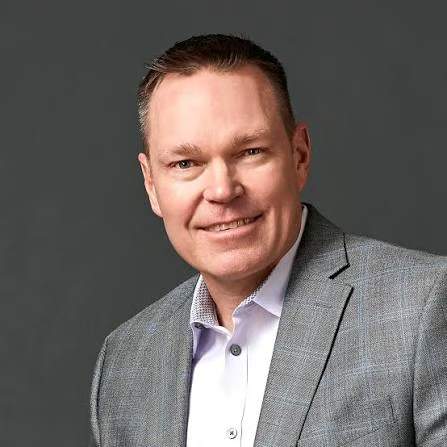
Jason Brenner: Sean Whitehouse started his career moving critical equipment across continents for the Marine Corps. Today, he's the Senior Vice president of Supply chain at Dick's Sporting Goods, leading a digital transformation that's redefining what modern retail operations can look like.
Sean Whitehouse: it's important to have that reactive muscle, that agility is such an important part of the supply chain. But you can't just have that.
Jason Brenner: Dick's Sporting Goods has one of the most unpredictable demand environments out there. A championship win or a viral moment can send orders through the roof overnight.
Sean's sean's answer has been to go all in on AI, RFID, and store-level fulfillment technology, reimagining how retail supply chains actually work.
GLOBAL INTRO
Jason Brenner: Welcome to Outside the Box, the podcast for leaders who move the global supply chain forward. I'm Jason Brenner, the Senior Vice President of Digital at FedEx, and in every episode, I sit down with the leaders reshaping supply chain and logistics around the world. On this show, we'll learn what it takes to move faster, build smarter, and to think outside the box.
INTERVIEW
Jason Brenner: So you spent more than seven years as a marine corps officer and 20 years in the consulting world. What did the military and exposure to hundreds businesses teach you about why some supply thrive and others seem to struggle?
Sean Whitehouse: Yeah, you know, let me talk about this from a retail supply chain perspective because that's where most of my experience, uh, lies. And I think when you think about the retail supply chain and, and ones that really thrive ones that struggle, uh, it starts with the merchants. And the merchants are such an important part of the chain, uh, when they're figuring out what they need, when they're generating the PO, uh, and it starts there at the supply chain. And their understanding of the trade-offs in supply chain and decisions they're making and the impact are really important. And then it pivots to the planning and allocation team sits between the merchants the, and the physical supply chain team, and their role is extremely important i- in, uh, in, in retail that they're there making sure that we're doing the balancing of when we flow it, how we flow it, how it works, and they're that middle, uh, entity right the merchants and, and the physical supply chain. And then you have the physical, the supply chain team that flows that product to the stores, to the athletes. We call our customers athletes at Dick's Sporting goods, and their role is to, is really to make sure that that product gets there when it's needed in the stores or to the athlete's home or wherever it's going. And I think about that team, that's a team that I lead here at Dick's Sporting Goods, and strong teams that I've seen do this and, I think, I think my team here does, does an amazing job, is number one, they're focused on supporting the business. The most important thing is getting that product to the store. Yes, costs are important. Obviously, we have to balance costs and service levels, what's really important is, is making sure that product is and leading with a yes if answer, not a no. 'Cause we can do anything in supply chain. It's just a matter of what are the implications and how we do it.
And then I think about what's really important I've seen in, in really strong supply chain teams do is really have that reactive gene or reactive muscle where, hey, you're gonna have unanticipated challenges day, and how do you react and how do you tackle and make those things happen is such an important part, uh, of a really strong performing supply chain.
And then the third element making sure that i've seen supply chains that, you know, embrace technology, which is certainly important, but also embracing, uh, the people side. You know, in Dick's Sporting Goods, call ourselves teammates. The teammates are such an important part of supply chain. And yes, technology's accelerating and AI, and those are all extremely important. But the people side, uh, and how we elevate our game and how do we get better i- is extremely important as well.
Jason Brenner: That's awesome. I mean, the connectivity back to the core business goals, the, the orientation around cross-functional partnership, uh, the orientation around how might we get there, you know, there's, there's, there's always a reason why something looks impossible. Uh, but finding a way to turn that impossible moment into a “That's hard, but we could do it,” um, that's, that's awesome. and that I can imagine that really separates the good from the great.
Sean Whitehouse: I think so. I thi- I think it does from my experience from seeing it in, in consulting for many years especially, and I think about how it, it drives us at exporting goods. It, it's really easy, to your point, if you're in a retail supply chain organization to at times, you know, really be focused on, on your function, optimizing that function. But you have to really make sure that team keeps the bigger goal in it's about optimizing the business
Jason Brenner: Absolutely. You kind of see that across a number of different functions.
It, it, it's very easy to stay in your lane, but you gotta wear that enterprise hat, um, and customer or athlete first hat. Um, and th- that's really where it delivers value. That's awesome
So Dick's Sporting Goods has leaned heavily into using stores as an omni-channel fulfillment network, shipping orders directly to retail locations in addition to their distribution centers. What does it take to make that operation work at scale?
Sean Whitehouse: Yeah. many things. Um, many things is re-- uh, is the answer at a high level, but let me get into it a little bit. I think number one, a partnership, and the partnership between store operations and supply and our merchandising and planning and technology that enables a lot of the thing has been extremely important because we believe in how we've structured this, uh, this strategy, and it's paying us dividends and allowing us to better support the athletes that we have out there. But it, it takes a lot of work, and takes a lot of partnership and communication and coordination back and forth. The other thing, uh, and I guess part of that, but underlying it, is a lot of our focus on what new technology capabilities do to help enable that you've got all those different distribution nodes out there that you have to enable and have to enable the journey. So I think the role that technology has played, um, in continuing to, to look at we can do better, how we can optimize that from both, uh, having the right inventory in those stores, but also the actual operations in the stores and then as well, obviously, um, you know, our partnership with, with FedEx and ensuring we can deliver to those athletes wherever they are.
Jason Brenner: And Leveraging your stores as fulfillment nodes, is that oriented towards optimizing for certain variables like cost, like speed, like athlete experience? How do you think about what you're trying to optimize towards?
Sean Whitehouse: That's a, it's a great question because you have all those points of distribution, and that brings complexity, uh, as opposed to if you had a handful of nodes that you supported that business from. But we believe strongly in it because we believe, uh, it allows us to get closer to the athletes, right? We are quicker to the athletes because of all of our stores throughout the country.
We can get to that athlete they need that order very quickly.
Uh, we can also be-- uh, basically meet whatever date we tell them we're gonna have there, we do a very good job at hitting that date, right? So we don't wanna hit it early, we don't wanna hit it late, obviously, but we wanna hit that estimated delivery date, uh, right on the mark.
And I think by-- we believe a huge part of the value proposition, um, is making sure we hit those estimated delivery dates and do it at a very speed throughout the year, not j- you know, not just during non-peak, peak as well. And so that's a critical part in why it's such a, it's such a huge part of our value proposition.
Jason Brenner: and i, I'm, i'm su- I'm assuming it's a huge driver of athlete satisfaction, uh, which is great. The sporting goods industry is uniquely seasonal and trend-driven. Can you walk us through a specific moment where your supply chain had to respond to something completely unexpected?
Sean Whitehouse: There's a couple. Um, I think, uh, coming out of cOVID, when I walked into this role and over this role, I mentioned earlier there was a, a huge backlog of inbound freight, and that was not unique to DICK'S goods. That was happening throughout many companies, including retailers here in the United States and other places. And the really was-- I've been super proud of the team really having to roll up our sleeves and say, “Hey, we need to move this freight as as possible from the DC yards through the distribution centers and all the-- and then deliver it, you know, to our stores and to their athletes.”
And I think that's been a, a, that was a huge challenge that was really driven by, yes, did some planning on, on what we need to have happen and how we do it, but really just a lot of heart and muscle in the team pushing through for that.
I think one of the really unique aspects of our, of our business, uh, in, in Dick's Sporting Goods is the launches we the product launches of various types of products that our athletes want. And, um, it's really-- it's a super exciting part in that this is a great new product, um, everything from, from obviously footwear to trading cards and other things.
And one of the things that I think about when you have launch product like that is y-you're getting that product coming to you, and you to really turn on it quickly and get it to the stores be able to deliver it to the athletes of the case, in certain cases. And w- I see w- I see this as our continued business grows with that, is the s- the supply chain team, o-other teams in Dick's Sporting goods stepping up and really delivering it very quickly. It, and it-- what you need to do that is, obviously, you need the visibility on inbound flow, and then you need deliver on that product. But just be able to, the reactive quick muscle, the agility that you need be able to do that, I think is really k- shines through in, in our, all of our launches, trading cards, footwear, and everything we do launches with.
Jason Brenner: That's a-- just another great example of what you talking about before, of how the supply chain team's job is to really enable the business goals, uh, and plug in and, and make sure there's connectivity and find a way,
Sean Whitehouse: Yeah, completely agree. And, and, uh, and it's important to have that reactive muscle, that agility is such an important part supply chain. Um, but you can't just have that. I, I think if where I've seen other companies struggle is if just have that, if you're just constantly chasing and reacting, you, you want that you never wanna lose that, but you also need to be planning. You need to be planning ahead. Need to do everything you can to, to get ahead of the challenges, get better inbound visibil- visibility on your product coming in, to make sure you're building the next generation capabilities. So you're doing everything to get ahead and not have to deal with as many of those fires that come up. But then you still have that reactive muscle say, “Hey, it happened. It's a challenge. How do you embrace it and go after it
And it's important that, you I think retail supply chains, y- you have to have, you have have a combination of both.
Jason Brenner: I I love that. I love that. The, it's the foundational capabilities while also having that reactive muscle.
Responding to unexpected shifts in flow or demand requires agility and close planning, like you were just articulating. You've been running an RFID pilot in partnership with FedEx.
Can you explain what problem that's looking to solve and how closing that gap will actually change the athlete experience?
Sean Whitehouse: Sure, absolutely. And and it's been a great pilot and, um,
In the case of RFID, we're trying to solve two issues or improvements. One is the connection to the athletes, right? And provide better, uh, visibility them on their order and where it is along the journey, and to take that same information provide it back to our teams so we can look where that, that package is along the journey and react to it and make decisions there.
So it's, it's feeding a, a blind we have, quite frankly, or had, a blind spot for both our athletes and our teams to be able to react. Uh, and for the, for obviously the athletes to able to see. And, you know, it's really important, as important, I, I think Fred Smith said it, as important as the package itself is the information on the package, right? So it's knowing that, and our athletes really wanna know every step of the journey where that item is that they bought to help them fulfill a dream and something they wanna do, you know, where it is along way, and to build that confidence. It's, part of that, the movement to them that, makes them feel like, okay, we, we really accomplished our goal. We really got them what they needed.
Jason Brenner: I love that. I I l-- I l- love when our customers partners quote fred Smith. He said that in, in the, in the '70s. Uh, said the information about the package is as important as the package itself, which was pretty crazy to say that, uh, and have that foresight regarding package level data and visibility in the '70s.
So w-we, we know that the biggest opportunity in supply chain... is using better insights to improve visibility we were just discussing.
Improve visibility, responsiveness, and decision-making. What guardrails or challenges has your team had to think as you evaluate deploying more AI-enabled tools into the supply chain?
Sean Whitehouse: Yeah, it, it's, it's a great question, and, um, we, we think about this a lot. As we've s- when we started on our AI journey, uh, many years ago, we started building some of the basic building blocks, uh, what we had available, quite frankly, a, a few years back from a technology perspective, and getting the team to embrace o- of what AI can can do, do for y- each of individually in your various functions.
And everywhere from the distribution centers to supply chain planning to logistics, and building kind of a, a ball rolling downhill of excitement. As we, we did that, and we still have it heading that direction, and technology is getting, AI technology getting better and better, the, the point that, that we spend a of time thinking about is the change management and the because I think in many ways, the technology is be way ahead. It's, it's a matter of how do, how do all of us and our pivot to embrace AI aI in new ways? And as we've done that and built that excitement, we've also started to put these guardrails in place,
And not for the sake of, tampering down that, that excitement. We want that excitement. We want everyone to embrace it in particular area. But we need to have the control, and and need to to have the control for a couple of reasons, is to make sure when we're thinking about these pilots doing and then eventually running how do we make sure we're not developing the same thing and sub-optimizing a different function or developing the same thing, uh, in two different areas? Um, and also a big part of it is how do we make sure that, that what we're gonna develop, bot, is gonna drive the value we think? So, uh, that's an extremely important part is, is, hey, we're doing this to drive value, so what's the value?
Um, not just because it's kinda cool to have. And so that's been the thing that we've put in place here over last year that has not slowed us down, and we've been very clear with with the team that, hey, here's how we need to embrace this, this control and structure for all these right reasons that it will allow us to get a even a better base to accelerate our AI journey.
Jason Brenner: It, it's really like most things. Uh, you- you're trying to optimize for empowerment, but also towards outcomes. Um, and ma- ma- and make sure that the team is enabled on the technology, but that they're directing it in the right place to get the best outcomes for your business and for your, for your athletes
Sean Whitehouse: It's a great point. And, y-you want that you want everyone-- 'cause that is something that focused on purpose, and I think at-- and, you know, some folks, as they've gotten to know more about AI, I think first were a little bit frightened, concerned. Like, uh, what's this going to do? Um, it's gonna replace my job.” And we've gotten, I think, a lot or if most of the, all the team at this point to a point where they see the value. And it's like, okay, part of that value is you only have still X amount of bandwidth as a teammate, and how do we make sure you're spending it in the places, right? So you're embracing this, and company's getting the value out of what we're creating and working together on.
And, um, that's the challenge. So it-- I, I think it's very much a big change management and I think the importance people or teammates, in our case at DICK'S Sporting Goods, in the AI journey, um, you know, can't be underscored enough, right? 'Cause I do think that technology's gonna to accelerate and get better and better, and that will not be a, a restrictor us, quite frankly.
It's another point of making sure we're about the company and not just our, our supply chain function.
Jason Brenner: Absolutely. Well, it's, it's a pretty exciting time to be in an enterprise or a supply chain team and being able to get all these new tools available, new capabilities available to, to, to have new way to look at our roles, um, a new way to improve the experience, a new way to rethink, um, how we operate. It's, it's a pretty exciting time.
So you, you've led supply chain operations in combat zones, in global Fortune 500s, um, in high-growth retail transformations. What do you know now about supply chain leadership that you wish you'd known earlier in your career?
Sean Whitehouse: yeah, I've learned a lot in my career, and I've been unbelievably lucky blessed to have so many amazing mentors in the Marine Corps and consulting and here at Dick's Sporting Goods, just great team members who've, who've taught me a ton. And, you I think, I, I think about supply chain and just the importance of agility and balance. And it's just in every step of my journey, it's just continued to be in force that you think about supply chain, you know, there may be times that you optimize for or for throughput, but always the most important thing tends to be agility. Like being able to turn left, turn right on a moment's notice is really important.
And the supply chain is very unique that it's, it's all about balance and, uh, and making sure you have that balance of capital cost, operating costs of service and throughput, and how do you that with your balance of, you know, investment building those capabilities. And that balance is not just your holistic supply chain, it's each one of us. You know, making sure that each one of us has balance in how we're attacking our problems. I was talking to my team at our town hall last week, and of the topics we talked about is each of us in each of the functions of supply chain, and supply chain as a whole, is always gonna have a bucket of things that, that we need to work on and get better in initiatives.
And the key is for each of us to always be working on those things, but to have balance and not to try to all do them all tomorrow, but how do you integrate those new capabilities? How do you c- how do you integrate elevating of us in our function supply chain and get better while still having, you know, work-life balance, integration, whatever, whatever term you wanna use, because this is a, this is a marathon, not a sprint. And if you start to think it as a sprint, people start to get burnt out I mean, it should feel like treadmill because we're always gonna get better and we're always moving forward, but shouldn't feel like you're running on a treadmill constantly. If you're doing that, uh, that's a challenge. And I think supply chain naturally, because of our, you the need to react, which we still need, we need to have, obviously, can become a, a sprint if we're not careful. Uh, but we need to continue to move forward, and I think that focus, agility, and balance is something that I've learned throughout my career, uh, and been really important from a supply chain perspective.
Jason Brenner: Amazing. I'm, I'm, I'm jealous of, uh, at Dick's Sporting Goods you, you know, you, you, get talk about agility, balance, marathons, sprints, treadmills. There's, uh, team sports.
There's a lot of good, um, sporting good analogies that you get to bring into every conversation, I'm sure.
Sean Whitehouse: A-absolutely. Absolutely.
Jason Brenner: So f-final question from my end. What business outside of retail or logistics you think is really nailing it in supply chain right now?
Sean Whitehouse: Wow. It, it's an interesting question, and, um, I, I focus almost all my time looking at in retail and it's enough going on in the space there and macroeconomic supply chain things that we all deal with that are there. But I would the one that probably, uh, and from my past experience is, is the military, uh, and the military supply chain. So we all, you keep up to speed on going on in the world and things that are happening throughout the world. And if you think about, um, the United States military and h- what needs to be true to support that from a supply chain logistics perspective, there are thousands and-- of individuals and things that focused on really supporting those missions on, on a daily
So it is a, an important part of our military, and, they-- I think they do a heck of a job based on everything that got going on in the world right now.
Jason Brenner: This was a fantastic conversation. Sean, thank you for being here and spending time with FedEx, um, and telling us about your business, about your athletes, and showing us what, what good supply chains look like
Sean Whitehouse: No, thank you, Jason. I appreciate your time, and enjoyed the conversation. Thank you.
OUTRO
Jason Brenner: Thanks for listening to Outside the Box with FedEx. I'm Jason Brenner. Subscribe to our show wherever you watch or listen. And if you want to explore how FedEx is driving digital innovation in supply chain, head to fedex.com/digital. We'll see you next time.